
Meknès is the imperial city that travelers rush past on the way between Fès and Volubilis — and the one they’re most pleasantly surprised by. In the late 17th and early 18th centuries, Sultan Moulay Ismail made it his capital and built on a staggering scale: monumental gates, vast granaries, and walls that run for miles. Today it’s grander than you’d expect and calmer than Fès, with a medina you can explore without the crush.
What to see and do
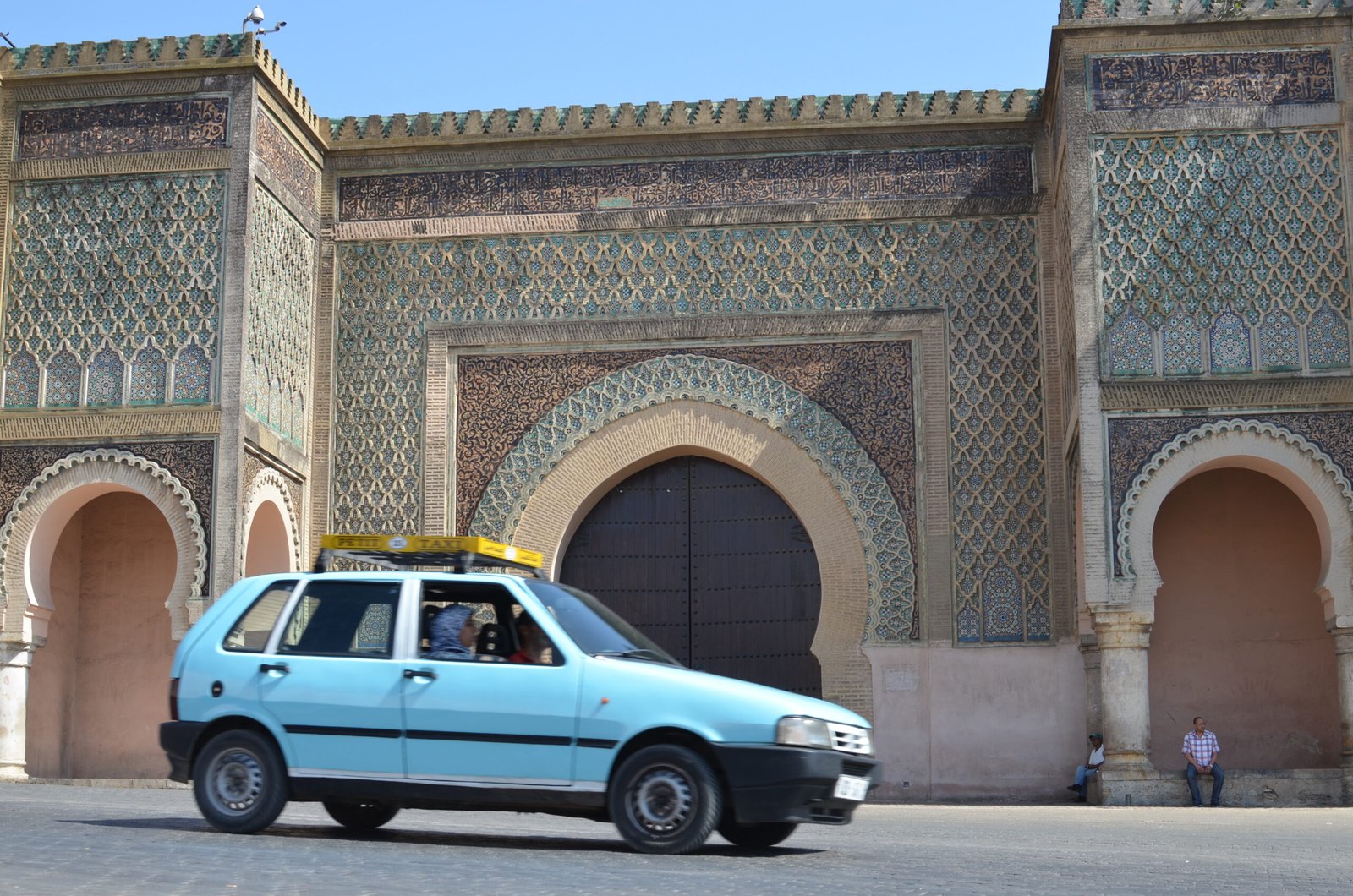
- Bab Mansour — completed in 1732, the great ceremonial gate facing Place el-Hedim, widely considered the finest gate in Morocco. Come in late-afternoon light.
- Place el-Hedim — the broad square between the gate and the medina: cafés, market stalls, and evening life.
- Mausoleum of Moulay Ismail — the sultan’s tomb complex. Non-Muslim visitors may explore the complex and view the tomb chamber from its doorway (the chamber itself is reserved for Muslim worshippers); modest dress is required.
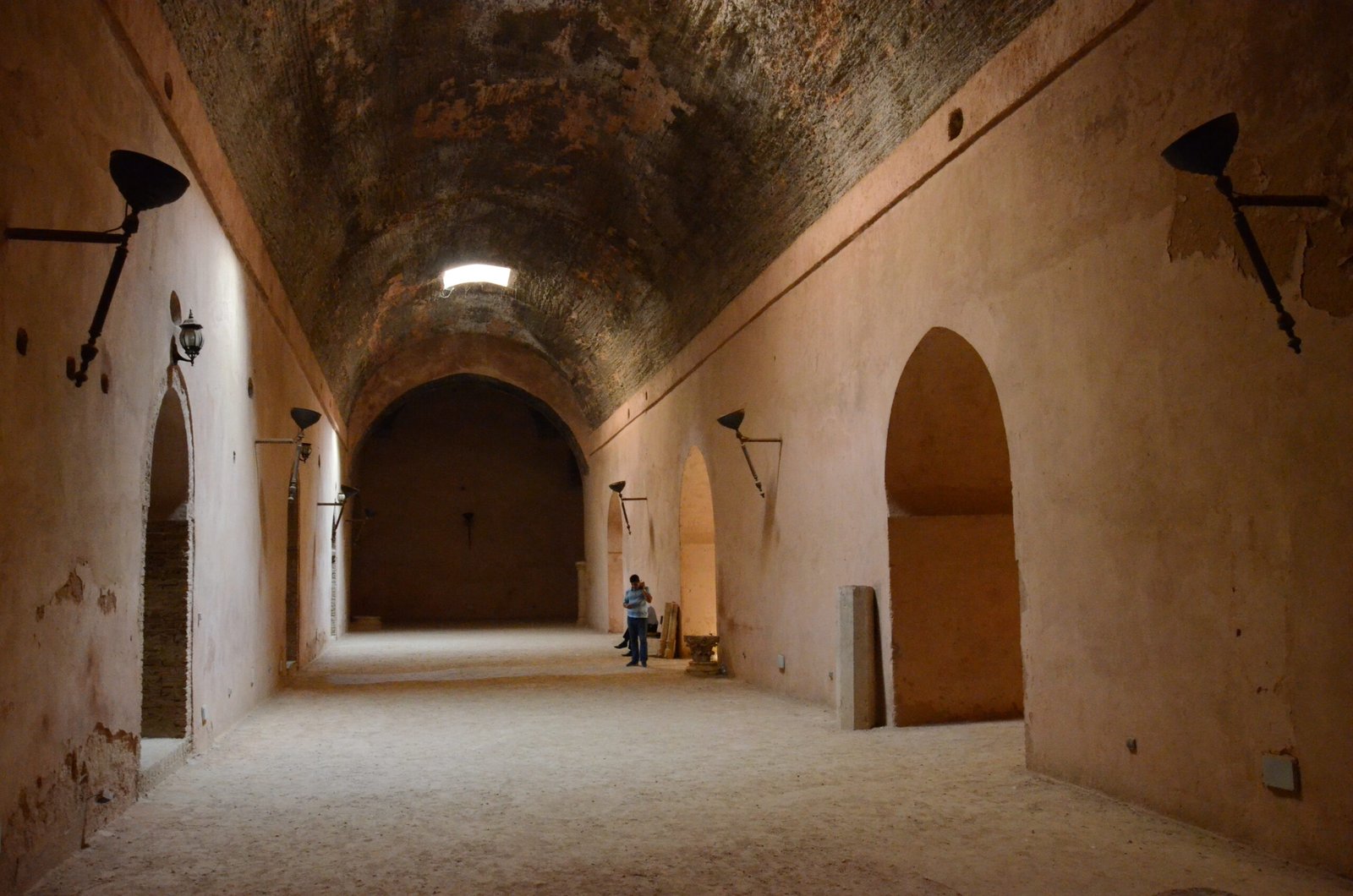
- Heri es-Souani — the royal granaries and stables: enormous vaulted storehouses built to feed a capital and its cavalry.
- The medina souks — quieter and more local in feel than Fès, good for unhurried browsing.
Practical planning
- Getting here: Meknès sits typically about an hour by road west of Fès (traffic-dependent; it is also on the main rail line) and about 30 minutes south of Volubilis — the three combine naturally into one day.
- How long: a half day for the gate, mausoleum, and granaries; a full day paired with Volubilis.
- Best time: March–May and September–November; exposed stone squares get hot at midday in summer, so start early.
An honest note
Meknès is a half-day city for most itineraries, not a multi-night base — its pleasure is depth over breadth: fewer headline sights than Fès, but the space to actually stand in front of them. Some monuments periodically close for restoration; your guide confirms what’s open on the day.
See it with Souk & Sand
- Volubilis & Meknès Day Trip — Roman ruins and the imperial city in one day from Fès
- 5-Day Imperial Cities & Desert Express — Meknès inside a five-day loop
Building an imperial-cities route? Design My Morocco Trip — tell us your dates and we’ll reply with an itemized quote in writing.
FAQs
Is Meknès worth a stop?
Yes — Bab Mansour and the mausoleum quarter justify a half day, especially paired with Volubilis.
How does Meknès differ from Fès?
Fès is a dense medieval medina; Meknès is a 17th–18th-century imperial capital — more monumental, more open, and noticeably calmer.
Can you visit Volubilis and Meknès in one day?
Comfortably — they’re about 30 minutes apart, and most travelers base the day in Fès.
Is the mausoleum open to non-Muslims?
Partly — visitors of any faith can enter the complex and view the tomb chamber from its entrance, outside prayer times and with modest dress; the tomb chamber itself is for Muslim worshippers.