
Tucked into a fold of the Rif Mountains, Chefchaouen is the medina painted in a hundred shades of blue — doors, walls, stairways, whole lanes washed indigo and sky. Founded in 1471 as a fortress against Portuguese expansion, the town stayed half-hidden in its mountains for centuries. Today it’s one of Morocco’s most photographed places, and — past the famous lanes — a genuinely gentle mountain town of weavers, farmers, and slow evenings.
What to see and do
- The blue medina — the old town’s lanes, where the pleasure is simply wandering: blue stairways, flower pots, and small squares. Early morning gives you the streets nearly alone.
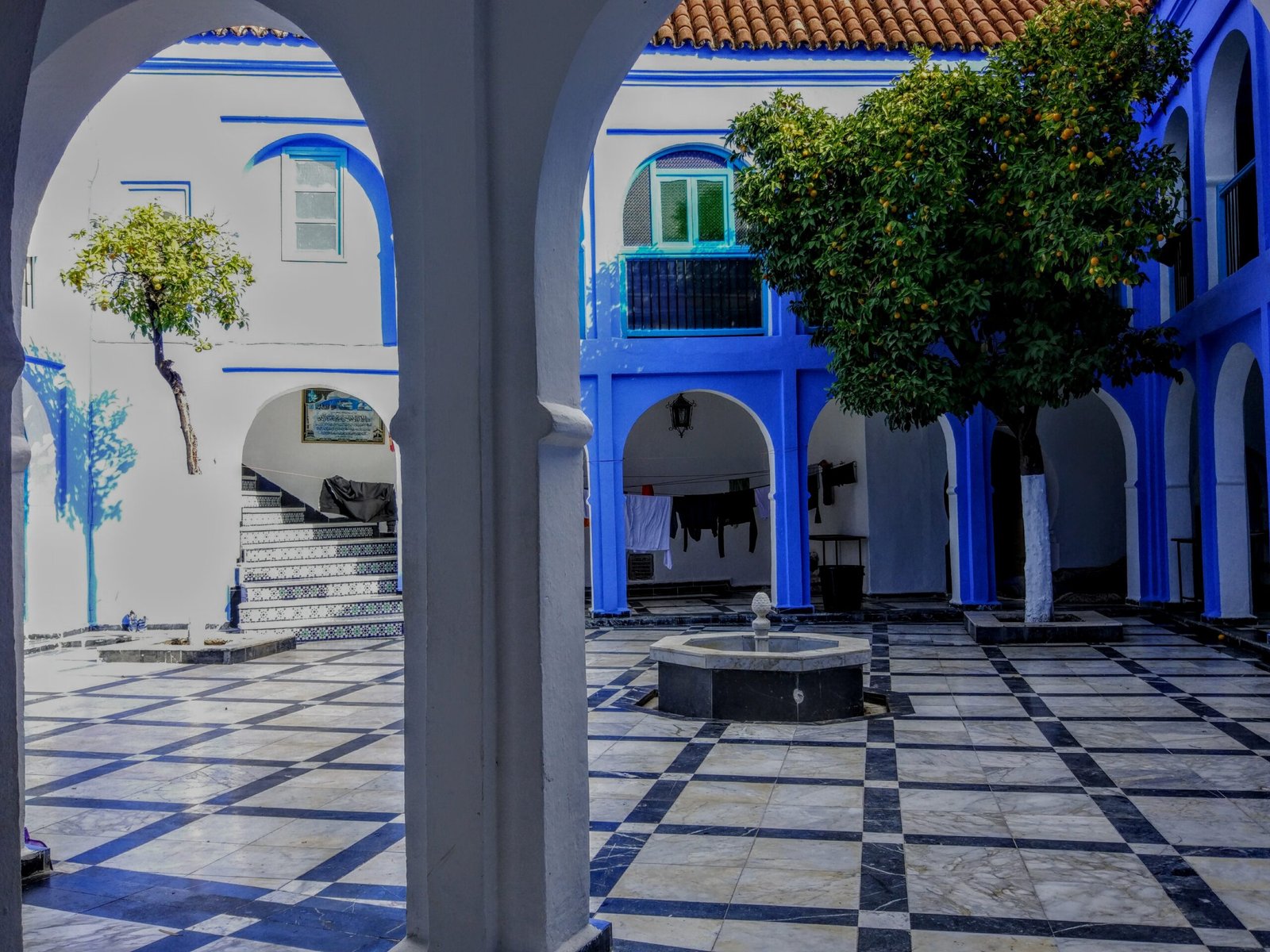
- The Kasbah — the 15th–18th-century fortress at the medina’s heart, with a garden courtyard, a small ethnographic museum, and a tower view over the rooftops.
- Plaza Uta el-Hammam — the main square facing the kasbah and the Grand Mosque: café terraces, mint tea, and the town’s evening rhythm.
- Ras el-Maa — the spring and small waterfall where the medina ends and the mountain water arrives; women wash laundry in the channel as they have for generations, and cafés line the path above.
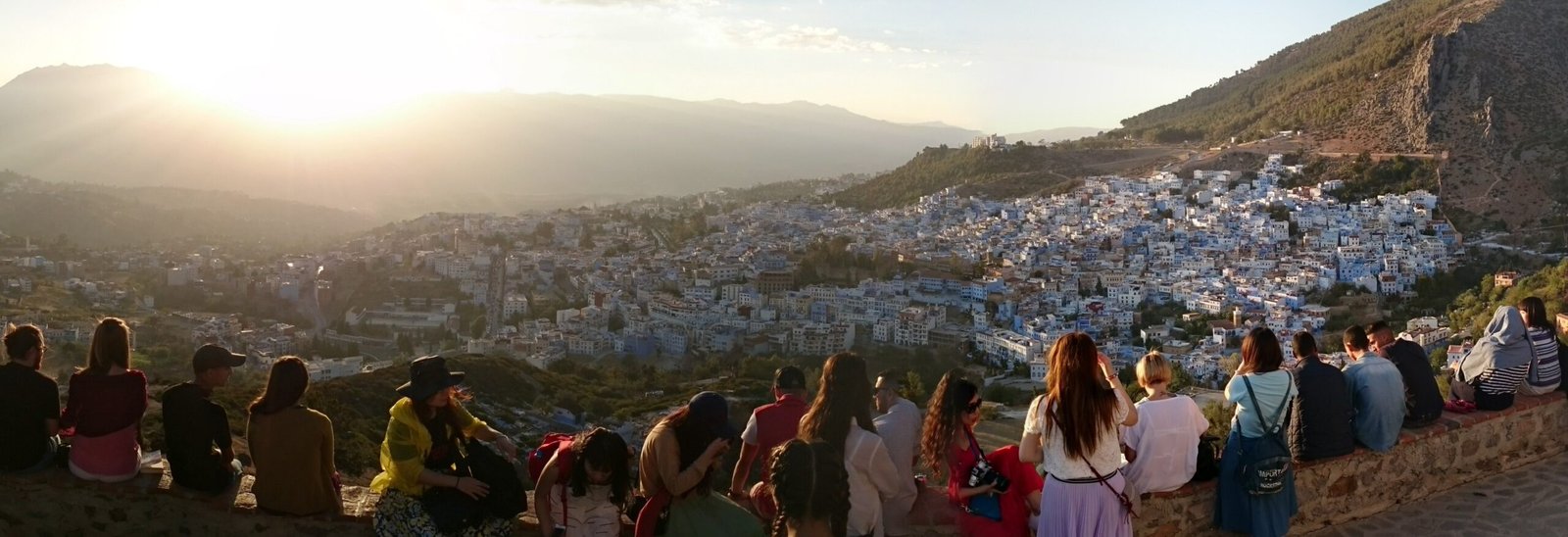
- The Spanish Mosque viewpoint — a short uphill walk east of town to a 1920s mosque (built, never used for worship) whose terrace is the classic sunset panorama over the blue rooftops.
Practical planning
- Getting here: typically about 2 hours by road from Tangier and around an hour from Tétouan; from Fès it’s a longer run of roughly 3.5–4 hours — which is why Fès travelers often give Chefchaouen a night rather than a day.
- How long: a full day covers the medina, kasbah, and the sunset viewpoint; one night lets you see the lanes in the quiet of early morning.
- Best time: March–May and September–November. The lanes are steep and stepped throughout — comfortable shoes are non-negotiable, and the town rewards slow walkers.
- A note on photographs: the blue lanes are people’s homes. Enjoy them, and ask before photographing residents or doorways up close.
An honest note
Chefchaouen is small — its fame can outsize it if you arrive expecting a full day of monuments. Its real offering is atmosphere: a morning in the lanes, tea on the square, a sunset over blue roofs. Travelers who treat it as a place to slow down, rather than a checklist, leave happiest.
See it with Souk & Sand
- Chefchaouen Day Trip — the blue city as a private day trip
- Custom Private Morocco Trip — give Chefchaouen a night inside a northern route
Slowing down in the north? Design My Morocco Trip — tell us your dates and we’ll reply with an itemized quote in writing.
FAQs
Why is Chefchaouen blue?
Honestly, nobody knows for certain. Several theories exist: the most common links the painting to the 1930s, when Jewish refugees settled in Chefchaouen and blue held spiritual significance; others suggest the color cools the lanes or discourages insects. The exact origin is uncertain — what’s certain is that residents maintain the tradition today, re-washing the lanes regularly.
Is Chefchaouen a day trip or an overnight?
From Tangier, a comfortable day trip. From Fès, the drive makes a night worthwhile — the medina at dawn is the best hour.
How much walking is involved?
The medina is steep, stepped, and entirely pedestrian in its upper lanes — allow a slow pace and solid shoes.
Can you visit Chefchaouen and Tangier in one trip?
Easily — they pair naturally, with Tétouan between them on the same road.