
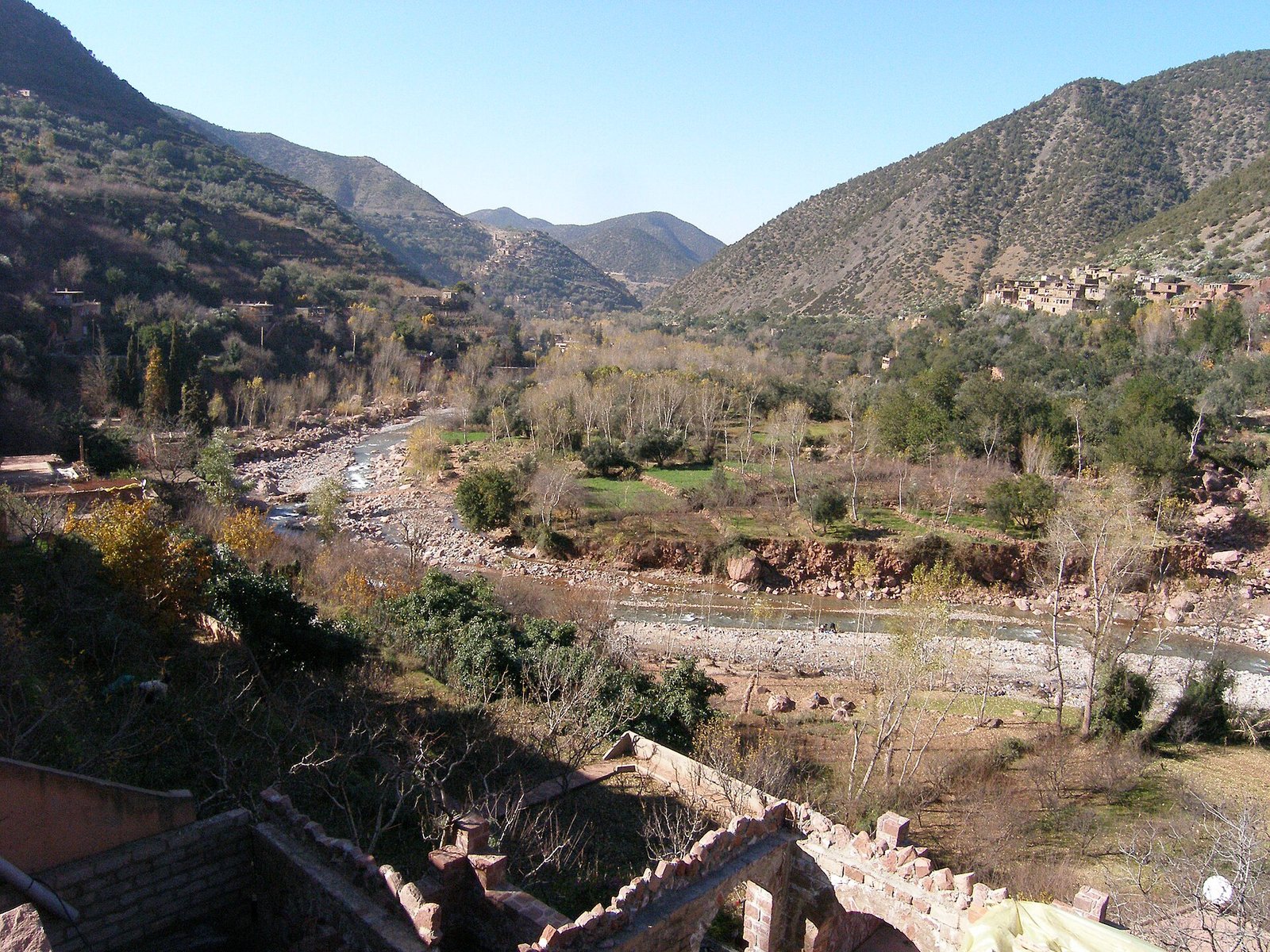
When Marrakech heats up, the city escapes southeast to the Ourika Valley — and so should you. About an hour from the medina, the road follows the Ourika River into the foothills of the High Atlas: walnut trees, terraced fields, villages of red earth, and lunch terraces set right over the water. At the road’s end, Setti Fatma’s waterfalls climb the rock above the village. It’s the closest mountain day to Marrakech, and the easiest to love.
What to see and do
- Setti Fatma waterfalls — a stepped series of falls above the village; the first is a relatively short climb — but steep, rocky, and potentially slippery, especially when wet; the upper ones are a rockier scramble where a local guide earns his fee.
- Riverside terraces — cafés set tables at (and in hot months, in) the river’s edge for tagine lunches with your feet near the water.
- Village souks — roadside and village markets along the valley (the main souk days draw traders from the surrounding hills).
- The valley road itself — pottery stalls, argan-oil cooperatives, and Amazigh villages stacked above the river; the stops are part of the day.
Practical planning
- Getting here: typically about an hour by road from Marrakech (roughly 30 km to the valley entrance, then the scenic climb to Setti Fatma).
- How long: a full, unhurried day; it can be a long half-day if you skip the upper falls.
- Best time: March–June for green slopes and full falls; Fridays and weekends are liveliest — and busiest — with Moroccan families. After heavy rain the river can rise quickly and paths can become unsafe — river conditions and weather can restrict access to the falls route, and trips follow local advice on the day.
- What to wear: grippy shoes for wet rock near the falls, sun protection, and a layer outside summer — the valley sits noticeably higher than the city.
An honest note
Ourika is popular because it’s close and beautiful — expect company at the first waterfall and the lunch terraces, especially on weekends. Start early, walk past the first fall, and the valley thins out quickly. The waterfall climb is genuinely rocky: it rewards the sure-footed and shouldn’t be oversold to anyone with mobility limits.
See it with Souk & Sand
- Atlas Mountains & Ourika Valley Day Trip — the valley as a private day from Marrakech
- Atlas Mountains destination guide — the wider region
Want the valley without the midday crowd? Design My Morocco Trip — tell us your dates and we’ll reply with an itemized quote in writing.
FAQs
How far is the Ourika Valley from Marrakech?
About an hour by road to the valley, with Setti Fatma at the end of the valley road.
How hard is the Setti Fatma waterfall walk?
The route to the first fall is relatively short but steep, rocky, and potentially slippery — not an easy walk; the upper falls involve scrambling over rock. Solid shoes are essential, wet weather can restrict access, and a local guide helps on the upper sections.
Can you swim in the Ourika River?
People paddle and dip at the terraces in summer, but currents and levels vary — follow local guidance on the day rather than assuming.
Is Ourika worth it if I’m also going to the Atlas proper?
Yes as a gentle first taste; travelers heading to Imlil or crossing the range can treat Ourika as optional.